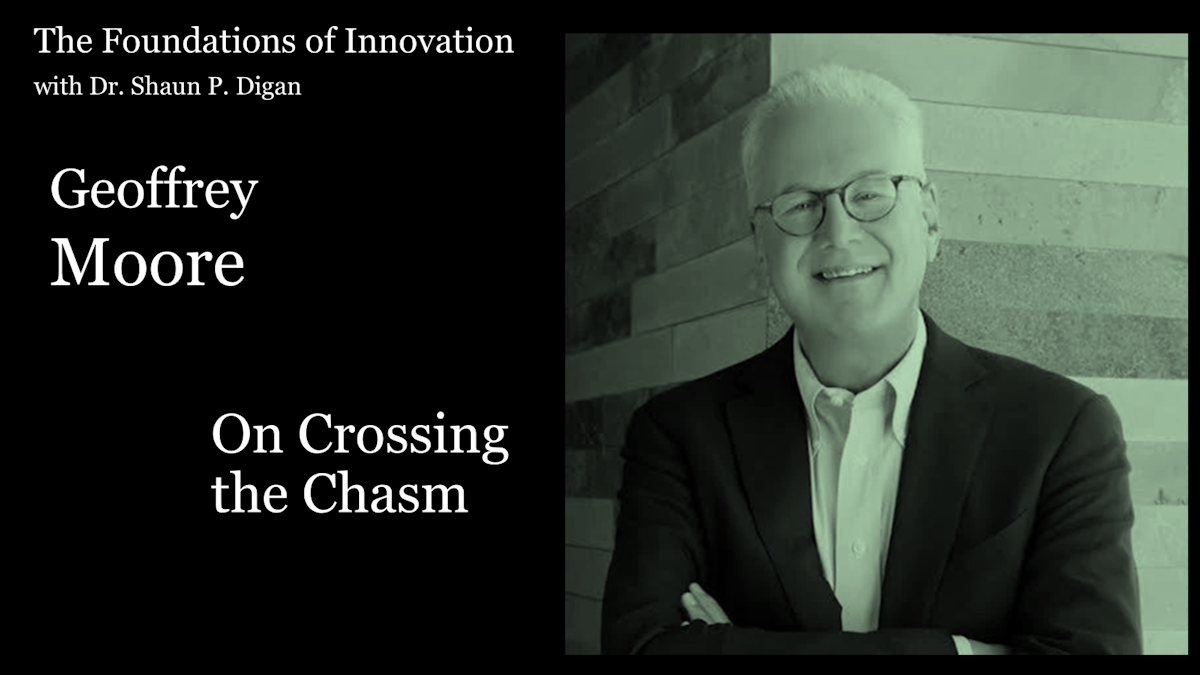
Week 15: Geoffrey Moore and the Crack in the Curve
For most of the early history of high-tech marketing, the adoption of a new product was drawn as a smooth curve.The picture came from Everett Rogers, whose 1962 book Diffusion of Innovations synthesi...
Read More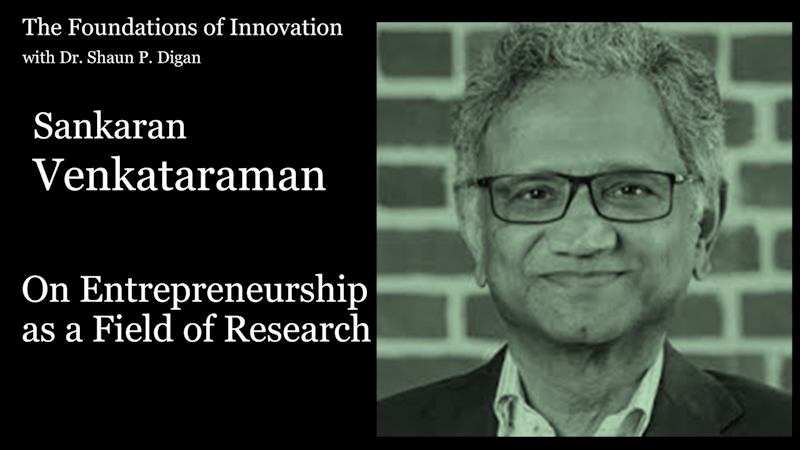
Week 14: Sankaran Venkataraman and the Gap Between the Research Agenda and the Founder's Desk
In 2000, two scholars published a short paper that told an entire field what it was for.The field was entrepreneurship research. The scholars were Scott Shane and Sankaran Venkataraman. The paper was...
Read More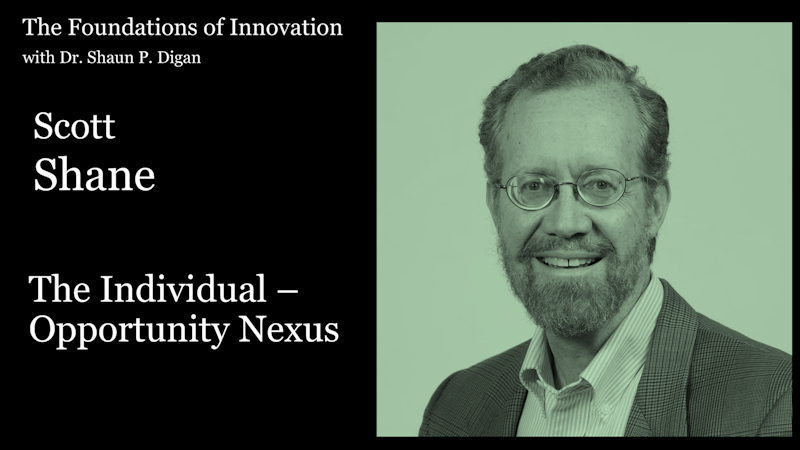
Week 13: Scott Shane and the Individual-Opportunity Nexus
For most of the twentieth century, entrepreneurship research had a problem it could not name.It studied entrepreneurs. It studied opportunities. It studied outcomes. It produced a steady stream of fi...
Read More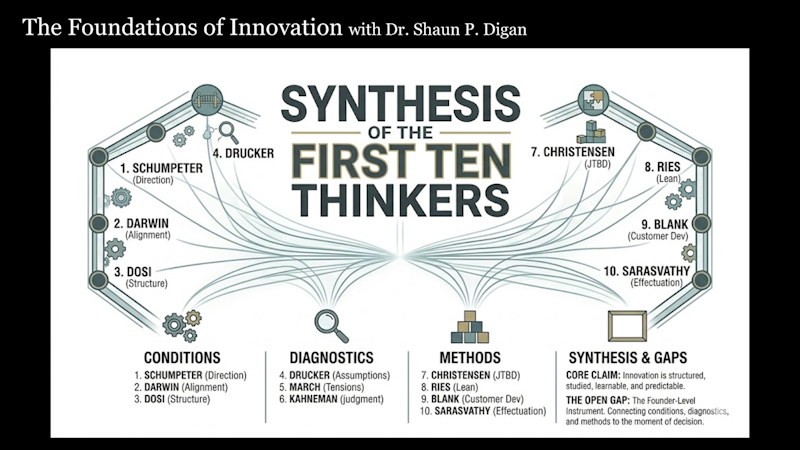
Week 11: What the First Ten Thinkers Were Saying Together
Eleven essays in, the series has covered ten thinkers. (Schumpeter, Darwin, Kahneman, Ries, Drucker, Christensen, March, Blank, Dosi, Sarasvathy.)Each piece stood alone. That was the design. Each th...
Read More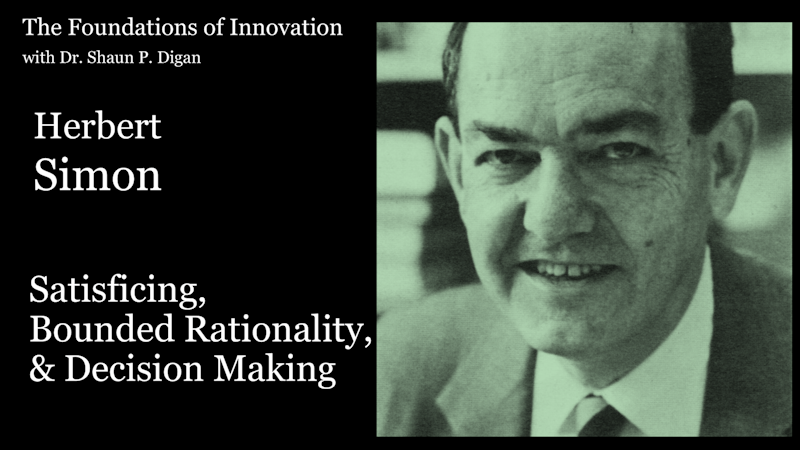
Week 12: Herbert Simon and the Cognitive Environment Every Founder Is Trapped Inside
Herbert Simon did not set out to study entrepreneurs.He set out to understand how people actually make decisions, as opposed to how economists assumed they did. What he found changed the behavioral s...
Read More
Welcome to Foundations of Innovation
The Foundations of Innovation Series A year-long series on the ideas that built the startup world and the one idea still missing from them all. For nearly a century, the greatest minds in economics,...
Read More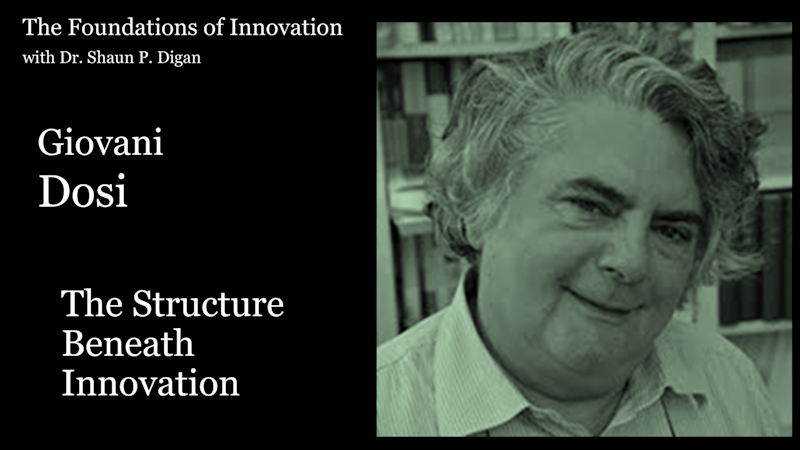
Week 9: Giovanni Dosi and the Structure Beneath Innovation
In 1982, an Italian economist published a paper that changed how a generation of researchers thought about technological change.Giovanni Dosi was working through a problem that Schumpeter had named b...
Read More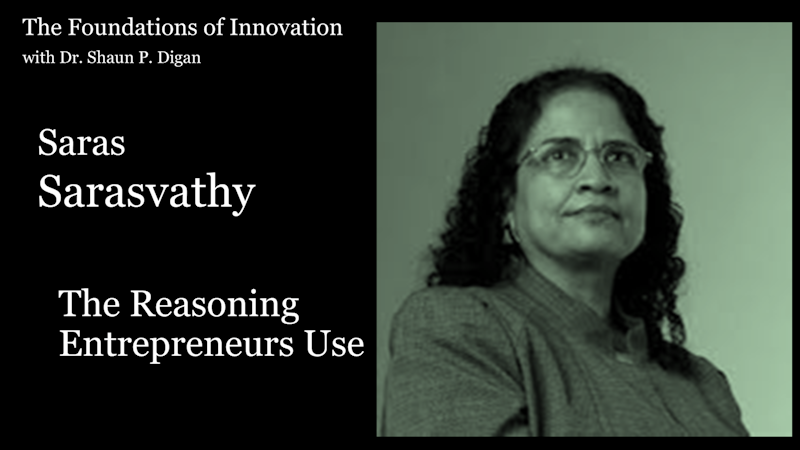
Week 10: Saras Sarasvathy and the Reasoning Founders Already Use
In the late 1990s, a doctoral student at Carnegie Mellon set out to answer a question the field of entrepreneurship had been asking sideways for decades.Saras Sarasvathy wanted to know how expert ent...
Read More
Week 8: Steve Blank and the Customer Development Model
Steve Blank spent twenty years building and selling companies before he figured out why most of them almost failed.Not why competitors failed. Why his own companies, the ones he built and ran and too...
Read More
Week 7: What March Got Right, What My Dissertation Couldn't Prove, and What Both Point Toward
In 1991, James March published what would become one of the most cited papers in organizational science.In it, he described a fundamental tension at the heart of every learning system: the choice bet...
Read More