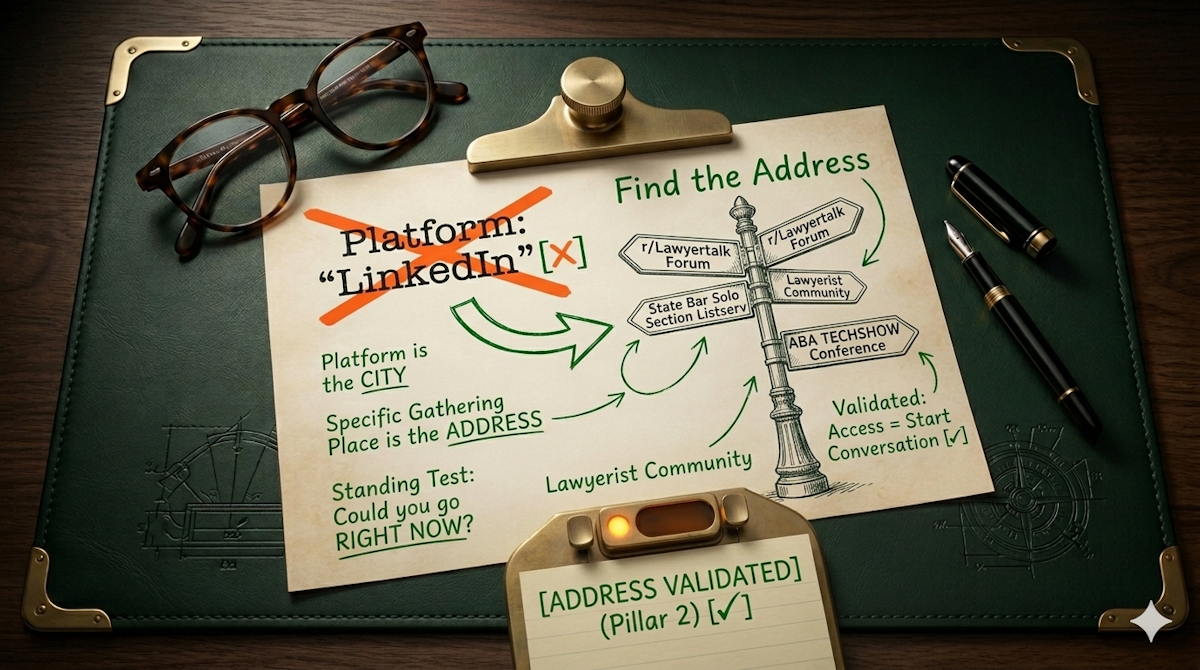
Where Is Your Customer Right Now? "LinkedIn" Is Not an Answer.
Most founders can tell you who their customer is. They have done the work. They can name the role, the context, the version of the problem the customer feels.Ask them where that customer is, and the ...
Read More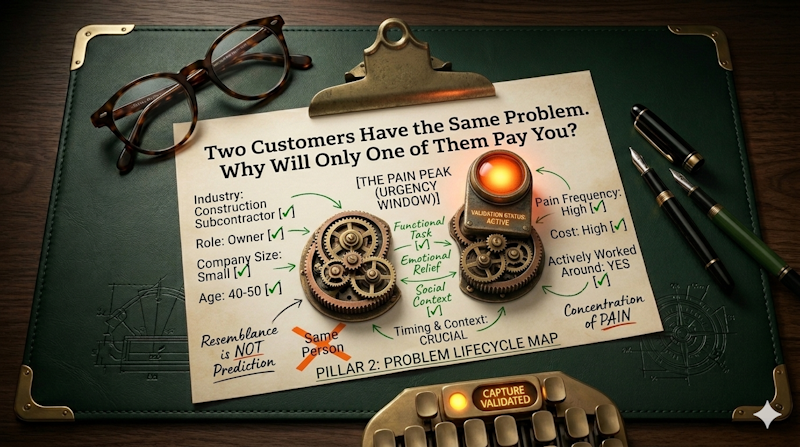
Two Customers Have the Same Problem. Why Will Only One of Them Pay You?
Most founders segment their market by who people are. Industry, role, company size, age, geography. They build a slide with three or four boxes, each one a type of person, and they call it segmentati...
Read More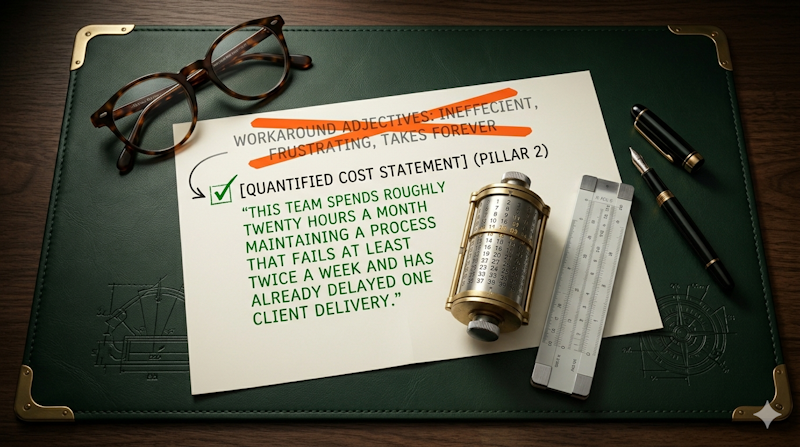
Your Customer's Workaround Is Expensive. Can You Put a Number on It?
Most founders can tell you their customer's workaround is expensive. Almost none can tell you how expensive.They describe it in adjectives. It is inefficient. It is frustrating. It takes forever. Eve...
Read More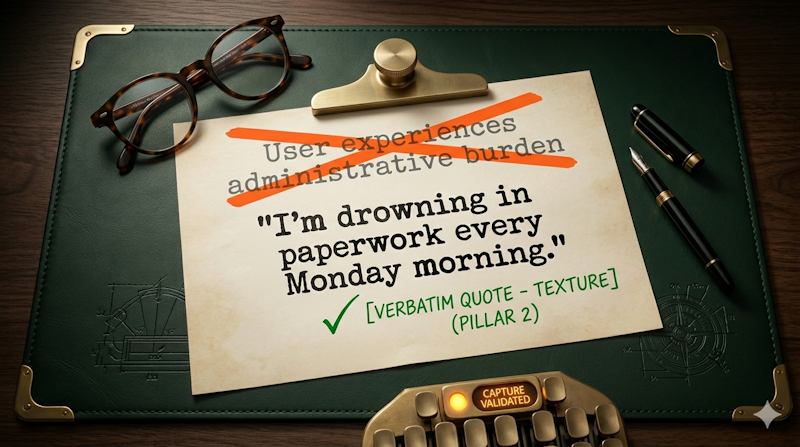
You Remember What Your Customers Meant. You Lost the Words They Used.
You walk out of a customer conversation sure you understood it. You did. That is not the problem.The problem is what you kept. You stored the meaning and dropped the phrasing. A week later you can ex...
Read More
Your Problem Description Sounds Professional. Your Customer Cannot Picture It.
Read your problem description out loud. If it leans on words like inefficiency, friction, visibility, engagement, or pain point, there is a good chance the person hearing it cannot picture what you a...
Read More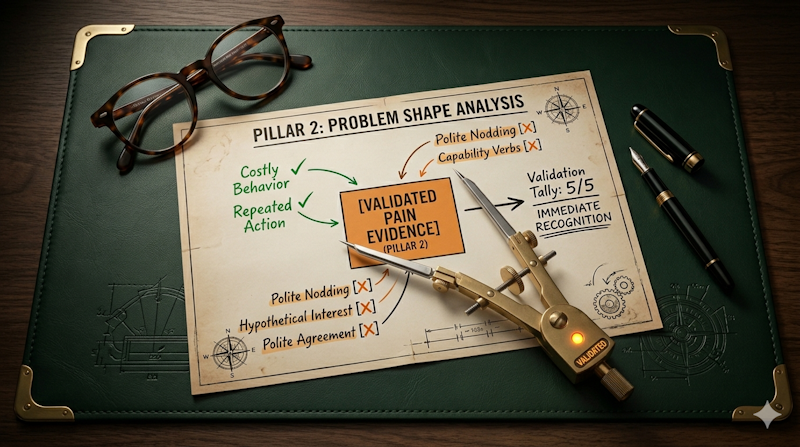
Your Problem Is Real. That Does Not Mean It Hurts Enough.
Most founders worry their problem might not be real. The more dangerous possibility is that it is real and nobody cares enough to do anything about it.A real problem and a painful problem are not the...
Read More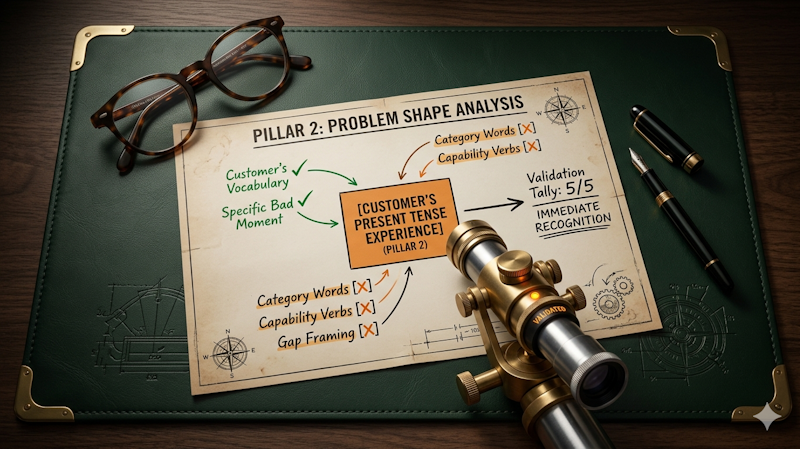
How to Describe Your Problem Without Describing Your Solution
Ask a founder to describe the problem they are solving, and most of them describe their product instead.They do not notice they are doing it. The description sounds like a problem. It has a customer ...
Read More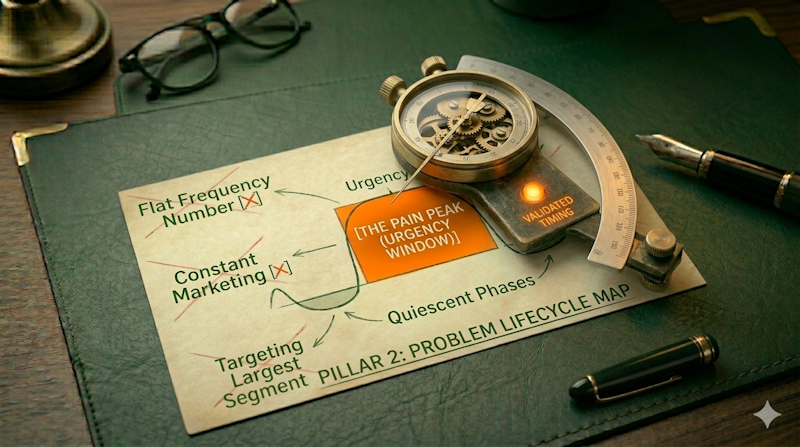
How to Map the Problem Lifecycle and Reach Customers When the Pain Peaks
Most founders treat frequency as a single number. The problem happens monthly, or weekly, or twice a year, and that number goes in the deck.The number hides the thing that matters. A problem you meas...
Read More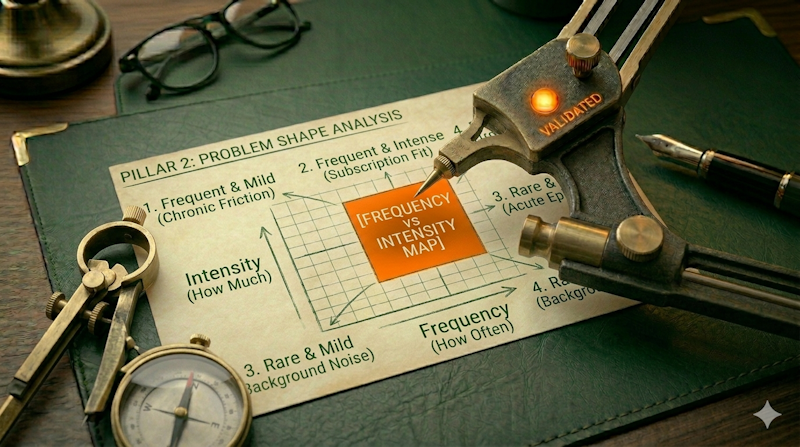
How to Map Problem Frequency and Intensity Before You Build the Wrong Business
Most founders ask whether their problem is real. Far fewer ask what shape it is.Shape is the combination of two things: how often the problem happens, and how much it costs when it does. Frequency an...
Read More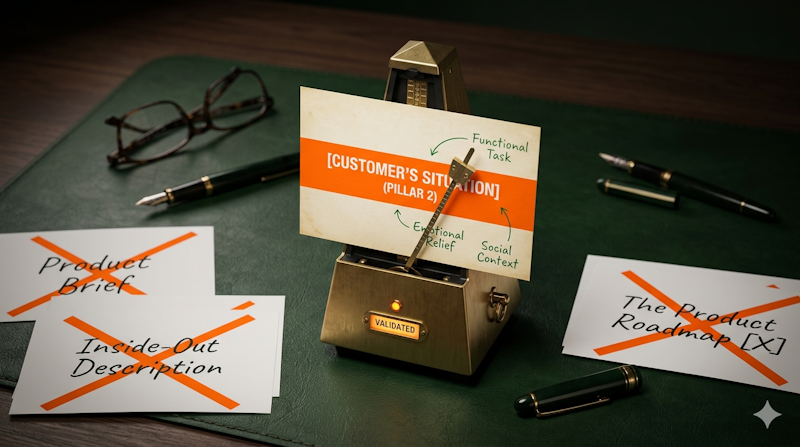
How to Define Your Problem Around the Job Your Customer Is Trying to Get Done
Most founders describe their problem from the inside out.They know what they want to build. They work backward to the problem it solves. What comes out sounds like a product brief. Clean, confident, ...
Read More