Week 4: The Lean Startup's Missing Layer
Week 4: The Lean Startup's Missing Layer
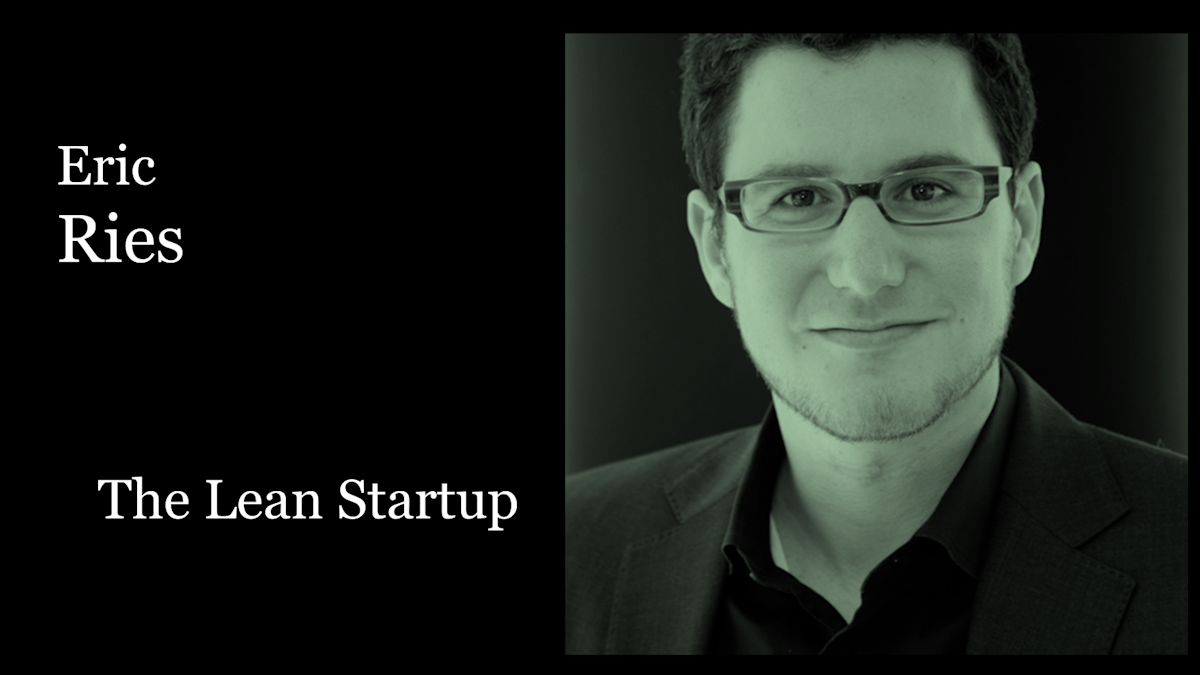
In 2011, Eric Ries published a book that genuinely changed how a generation of founders thinks about building companies. The Lean Startup: How Today's Entrepreneurs Use Continuous Innovation to Create Radically Successful Businesses
Unlike most business books, it worked. The build-measure-learn loop became the operating framework for early-stage startups across industries and geographies.
Accelerators taught it. Investors expected it. Founders internalized it so completely that iteration and validated learning became the default language of the startup world.
That is a real achievement. And it is also where the problem starts.
Ries's Contribution
Before Lean Startup, the dominant model of building a company looked something like this: write a business plan, raise money, build the product, launch, and hope the market responded.
The assumption baked into that model was that you could think your way to a correct answer before testing it. That planning was a substitute for learning.
Ries dismantled this with a deceptively simple insight.
You cannot think your way to product-market fit. You have to build something, put it in front of real people, measure what actually happens, and let the data change your thinking. Then do it again.
The loop [build, measure, learn] was not just a process. It was a philosophy.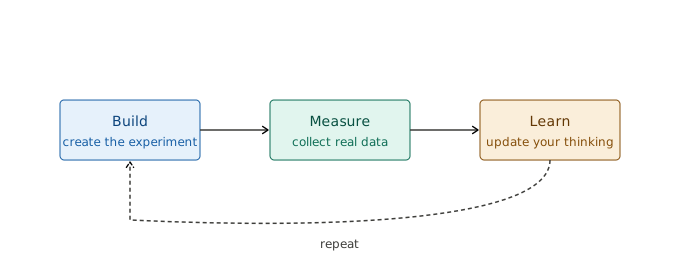 Uncertainty is not a problem to be solved before you start. It is the condition under which you operate. The goal is not to eliminate uncertainty but to reduce it systematically through rapid experimentation.
This reframing mattered enormously. It gave founders permission to start before they had all the answers. It gave investors a framework for evaluating whether a team was learning.
It shifted the conversation from "is this idea right" to "are we finding out fast enough."
The minimum viable product, the pivot, validated learning… these ideas entered the vocabulary of startup culture because they solved a real problem.
Founders were building too much before testing anything. Ries gave them a way to test before they built.
Why It Mattered
The lean methodology arrived at exactly the right moment. The cost of building software had collapsed. The ability to reach customers directly had exploded. The conditions were in place for faster iteration than any previous generation of founders had access to.
What was missing was a framework for thinking about speed differently. Not speed to market in the traditional sense but speed to learning.
Ries provided that framework and it spread because it was genuinely useful. Founders who adopted it stopped confusing activity with progress. They started asking better questions about what they were actually learning from each cycle.
The broader impact was cultural as much as methodological. Lean Startup made failure respectable. Not failure as an end state but failure as information.
The pivot became a strategic tool rather than an admission of defeat. Founders who changed direction based on evidence were celebrated rather than criticized for not sticking to the plan.
That shift in how the startup world thinks about learning and iteration is Ries's lasting contribution. It is real and it is significant.
What It Left Open
Here is the problem nobody talks about.
Build-measure-learn assumes you already know what question to ask.
The loop is a learning engine. But a learning engine only works if you point it at the right thing.
If you are measuring the wrong variable, optimizing the wrong behavior, or iterating on the wrong assumption, the loop does not save you. It just helps you fail faster and with better data.
Most founders who struggle with lean methodology are not failing because they iterate too slowly. They are failing because they never did the harder work that has to happen before the loop starts.
They never mapped their assumptions. They never asked which beliefs their entire business depends on. They never identified which assumptions, if wrong, would collapse everything else.
The build-measure-learn loop is a powerful tool for testing assumptions. It has almost nothing to say about which assumptions to test first.
This is the missing layer. Not iteration. Not validation. Not speed.
The work of surfacing what you actually believe about your customer, your problem, your market, your business model, your go-to-market, and your financials… and then asking honestly which of those beliefs is most likely to be wrong and most dangerous if it is.
Without that work, the loop is just activity. Founders run experiments, collect data, ship product, and still feel like something fundamental is unresolved. The loop was running. The foundation was never examined.
Ries gave founders a methodology for learning. What he left open was a framework for knowing what they most urgently need to learn.
What This Means for Founders Now
The lean methodology has been so thoroughly absorbed into startup culture that questioning it feels almost heretical.
But the question is not whether build-measure-learn is useful. It is. The question is what has to be true before the loop can do its job.
A founder who starts the loop without mapping their assumptions is like a scientist running experiments without a hypothesis. The data accumulates. The learning does not.
The assumptions that matter most are not always the ones that feel most uncertain. Sometimes the most dangerous assumption is the one that feels most obvious. The customer who seems clearly defined. The problem that seems clearly validated. The business model that seems clearly viable.
These are exactly the assumptions that deserve the most scrutiny before you start building and measuring, because they are the ones most likely to go unexamined.
The discipline that Ries built around iteration is real and necessary. What it needs underneath it is an equally rigorous discipline around assumption mapping. A structured way of asking which beliefs your business depends on, which are supported by evidence, and which are hopes dressed up as conclusions.
The build-measure-learn loop is one of the most useful tools ever given to founders. But a tool is only as good as the clarity of the problem it is pointed at.
Before you build, ask the question the loop never asks on its own.
What are you assuming that you have not yet earned the right to assume?
Follow on Substack to get the weekly series directly to your inbox.
Next week: Peter Drucker and the question every founder avoids. Not what are you building, but what business are you actually in.
Published March 30, 2026
Last Updated March 30, 2026
By Dr. Shaun P. Digan, MBA, PhD
Sources
The Lean Startup, Eric Ries (2011)
Discovery-Driven Planning, Rita McGrath & Ian MacMillan, Harvard Business Review (1995).
About the Author
Dr. Shaun P. Digan is the founder of Startup.Ready and the creator of the Startup Readiness Framework, a research-based system for evaluating and strengthening the foundations of early-stage startups. He holds a PhD in Entrepreneurship from the University of Louisville and has spent 15 years teaching, advising, and consulting with founders. In this series, The Foundations of Innovation, he writes on the ideas that built the startup world and the one idea still missing from all of them.